Bringing order to chaos

Most companies run finance, operations and IT as three separate companies. I make them run as one.

Twenty years of leadership, ten of them turning finance functions into decision engines — and the operations around them into something that scales. Financial clarity, operational efficiency and growth, in businesses from $30M to $300M. I take one engagement at a time, and the next seat is open.

C-level since 2017 CFO, COO and integration seats CPG & Beauty Hospitality & Retail Omnichannel M&A & Exit readiness US & Europe

The record

What changes when I arrive.

Every engagement is a state change. These are the ones that mattered most.

Month-end close 40 days 21 days No additional headcount
Accounts receivable No function $2M collected AR infrastructure and EDI built hands-on with consultant · Ulta · Best Buy · Nordstrom
Board reporting Reactive Questions anticipated Trust established in 2 months
Accounting system Legacy, on-premise Cloud, live in 3 months Full implementation led end to end
Store development Misaligned with growth plan Rebuilt to meet targets Site selection · Design · Lease negotiation
Budget process 4 months 1 month, teams aligned Mezzetta 2025–26 · Finance, sales and marketing building one plan
Cross-functional planning Defensive silos Credible shared projections Controls set at the right level, without slowing the business

Read the case studies in full

The engagement

One company at a time.

I take one seat, and it is the job. Not fractional, not split across a portfolio, not two days a week on someone else's problem. What the seat is called depends on what the business actually needs — interim CFO, COO, or a mandate that runs across finance, operations and IT. What doesn't change is that I own the outcome, not the recommendation.

What I take on
One operating seatInterim CFO, COO, or a cross-functional mandate. Full ownership either way, for as long as it takes.
Exclusivity
One clientNo fractional arrangements and no concurrent engagements.
On site, Bay Area
Up to 4 days a weekIn the building, with the team, where the problems actually surface.
Outside the Bay Area
2 days a week on siteTravelling, with the balance of the week worked remotely.

What the seat covers.

The operation

Finance, operations and IT running as one

  • Cross-functional planning that produces one set of numbers, not three
  • Budget and forecast cycles compressed from months to weeks
  • Silos removed between finance, sales, marketing and operations
  • Leadership through transition, growth, or a vacant executive seat

The machinery

Closes, controls and working capital

  • Month-end close optimization
  • Expense management, internal controls and approval processes
  • AP, AR and working capital
  • Reporting quality and KPI development
  • Controls set at the right level, without slowing the business

The systems and the team

ERP programs, and the people who have to run them

  • ERP scoping, selection and implementation — led as a business program, not a technology project
  • Stalled implementations rescoped and put back on plan
  • Right-sizing processes and systems to where the business is going
  • Assessing and rebuilding teams to match skillsets to growth goals

The plan and the transaction

Strategy, board, capital and exit

  • Strategic financial plans that survive scrutiny
  • Board and investor reporting
  • Refinancing existing lines or sourcing new ones
  • M&A activity and due diligence preparation
  • Sale process readiness across HR, legal, IT, financial and tax

What I don't take on.

Audit and tax preparation. Bookkeeping. Permanent search and staffing. And advice that stops at a recommendation, leaving the execution to somebody else. If that is what the business needs, I will say so in the first conversation and point you somewhere better.

The path

An unusual route to the operating seat.

Command before finance, and finance before advisory. Each step is why I'm comfortable in rooms where the answer isn't known yet.

1998–2001

French Army Academy

MA in International Relations.

2001–2008

French Armed Forces

Operational unit leader, 100+ people. Multiple domestic and overseas deployments.

2009–2010

MBA, Finance concentration

Graduated on the Dean's list.

2010–2014

Mergers & acquisitions — generalist

Transactions across multiple sectors. Taught corporate finance in the HEC Paris undergraduate program.

2014–2017

Mergers & acquisitions — restaurant sector

Advising US clients on M&A, IPOs and follow-on offerings. Selected for the internal leadership program.

2017–2021

Chief Financial Officer

Specialty's Café & Bakery. $110M revenue. Finance, real estate and legal.

2021–2022

Chief Operating Officer

SBE — Ella Mia. Multi-brand hospitality operations.

2022–2023

Interim CFO

Credo Beauty. $30M revenue. PE-backed. Rebuilt reporting and cross-functional collaboration, made financial information self-serve through the existing ERP, and built the three-year business plan with the incoming CEO. Team transition and relocation.

2023–2024

Interim CFO

Solawave. $50M revenue. VC-backed omnichannel beauty hardware. Books cleanup, process documentation and optimization, ERP scoping, controls and approval processes. First financial audit.

2025–2026

Interim CFO

Mezzetta. $300M revenue. Business integration across finance, operations, IT and strategy. Direct partnership with CEO and board.

In their words

What it's like on the other side of the table.

Eight people who worked with me — boards, CEOs, auditors, and the operators who had to live with the decisions.

Who I am

Planning under pressure, then and now.

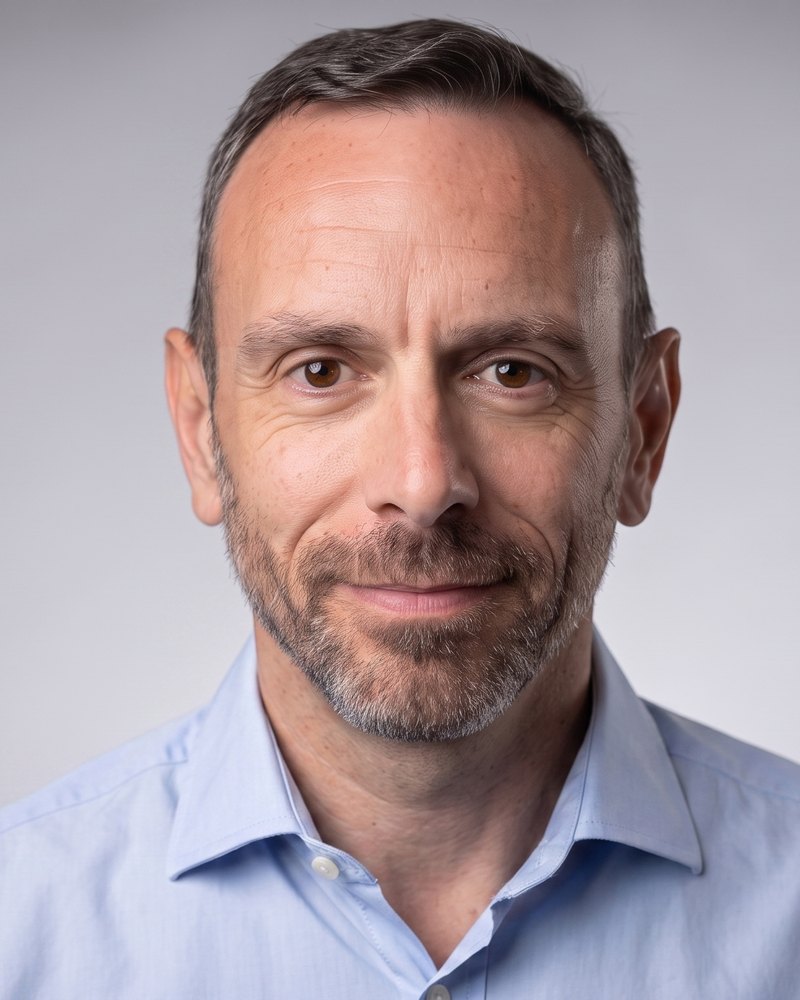
Thomas Negrel

I led operational units of a hundred people before I ever built a financial model. That order matters. It taught me that plans are worth exactly what the team executing them understands, and that the hardest part of any turnaround is rarely the arithmetic.

Since 2017 I've sat in C-level seats across hospitality, beauty, retail and consumer packaged goods — as VP of Finance, as COO, and as interim CFO through transitions, audits and relocations. A father of four, and a road cyclist with a serious training habit.

Your talent is already in the building

Strong teams are usually built from the people you have. Create the conditions for their success and they rise to it.

Work hard only when necessary

The rest of the time, simplify and automate to free up your team's attention. They end up happier, more productive and more loyal.

Debrief, learn, adjust

Processes and systems need regular correction. We build the rituals that make an organization learn from a mistake once.

The operating loop

  1. Plan
  2. Execute and make mistakes
  3. Leave your ego behind and learn
  4. Repeat steps 1 to 3

Start here

Let's find out whether I'm the right person for this.

Send me a note using the form below. Tell me what's not working, and I'll tell you honestly whether it's a problem I can solve.

Goes straight to my inbox. I read every one and reply personally.

+1 415 481 9495